Understanding P2P VPNs: How They Work and Why They Matter
Peer-to-peer virtual private networks are becoming increasingly popular as users seek secure and efficient ways to share files and stream content. These networks combine the decentralized nature of P2P systems with the encryption and anonymity of VPNs, offering a unique solution for privacy-conscious individuals.
What is a P2P Connection?
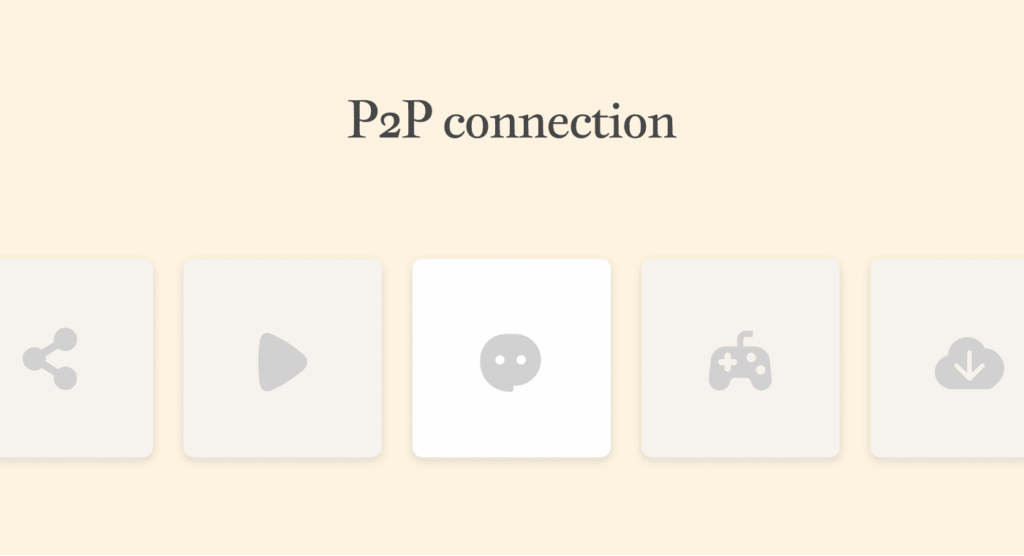
Before diving into P2P VPNs, it’s essential to grasp the concept of a peer-to-peer connection. This decentralized model allows devices—known as peers—to exchange data directly without relying on a central server. By eliminating intermediaries, P2P networks enhance efficiency, reduce costs, and improve resilience against single points of failure.
Common applications of P2P connections include:
- File sharing (torrenting): Users transfer large files directly, bypassing centralized servers.
- Decentralized streaming: Peers distribute live or on-demand video, reducing server strain.
- Real-time communication: Peer-to-peer VoIP and video calls avoid centralized relays.
- Online gaming: Multiplayer sessions and direct host connections thrive in P2P environments.
- Content distribution: CDNs use peers to cache and share data, improving load times.
- Distributed storage: Data is synced across multiple nodes for redundancy.
- dApps and blockchain: Decentralized apps and cryptocurrency networks operate on peer networks.
- Mesh networking: Devices form local networks without centralized infrastructure.
What is a P2P VPN?

A P2P VPN merges the principles of peer-to-peer networking with VPN technology. It establishes secure, direct connections between devices, enabling faster file transfers and smoother streaming. By encrypting data and masking IP addresses, these VPNs ensure privacy during P2P activities. They’re often called decentralized VPNs (dVPNs) because they rely on user-operated nodes rather than centralized servers.
Key differences from traditional VPNs include:
- Network structure: P2P VPNs use a mesh of user-run nodes, while conventional VPNs depend on fixed server farms.
- Trust model: Decentralized networks introduce variability in node reliability, whereas centralized providers maintain strict control.
- Performance: P2P VPN speeds depend on node availability, while premium services like NordVPN offer consistent, high-speed connections.
Are P2P VPNs Safe?
While P2P VPNs encrypt data and hide IP addresses, their security hinges on implementation. They protect against eavesdropping but don’t guard against malware or phishing. Users must still follow best practices, such as avoiding suspicious files and enabling antivirus software.
Legal considerations include:
- P2P connections themselves are legal, but sharing copyrighted material without permission is not.
- VPNs are permitted in most countries, though restrictions exist in regions like China and Russia.
- Always use P2P VPNs responsibly to avoid legal repercussions.
Benefits of a P2P VPN
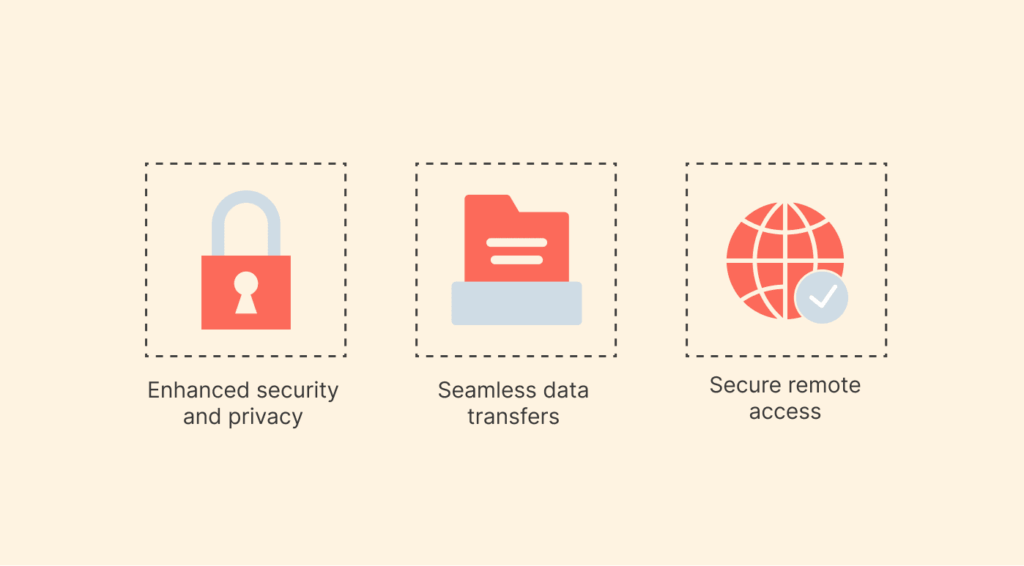
Advantages of P2P VPNs include:
Enhanced security and privacy
Direct device-to-device connections reduce reliance on third-party servers, lowering the risk of data breaches. Encryption ensures sensitive information remains private.
Seamless data transfers
By bypassing central servers, P2P VPNs accelerate file sharing and streaming, especially for large datasets.
Secure remote access
Users can access devices remotely without centralized infrastructure, ideal for distributed teams or personal use.
Better privacy
Traffic routed through multiple peers makes it harder for third parties to track online activity, though device vulnerabilities remain a concern.
Bypassing censorship
Decentralized networks complicate traffic monitoring, though advanced tools like deep packet inspection (DPI) may still detect P2P activity.
Difference between a P2P VPN and a Commercial VPN
| Feature | P2P VPN | Commercial VPN |
|---|---|---|
| Working mechanism | Routes traffic through user-run nodes | Uses company-managed servers |
| Security and privacy | IP masking, but node risks exist | Consistent encryption and no-logs policies |
| Performance | Depends on node quality | Fast, reliable servers |
| Servers | Active peers only | Extensive global coverage |
| Usability | Requires technical setup | User-friendly apps |
| Customer support | Limited or none | 24/7 assistance |
FAQs
Can P2P be tracked? Most P2P VPNs route traffic through multiple nodes, making it difficult to trace individual connections.
Does a P2P VPN offer better download speeds? While P2P VPNs can improve transfer efficiency, node availability and hardware may cause fluctuations in speed.
Do P2P networks require special software? Yes. Tools like BitTorrent clients or dVPN applications are necessary to participate in P2P networks.
Will my IP address be exposed? A properly configured P2P VPN hides your IP, but leaks can occur if settings are misconfigured.
Do all VPN providers support P2P? No. Some restrict P2P use to specific servers or prohibit it entirely. Verify a provider’s policies before subscribing.
Related articles from the VPN Guides section
Decentralized VPNs (dVPNs): What are They, Why Use Them?
You’ve likely used a VPN before to stream content unavailable in your region or to secure your conne...
Abeerah HashimJanuary 8, 2026
How to Get a Surfshark Free Trial in 2026
While Surfshark is one of the pocket-friendly VPN services, it doesn’t have a free version for its u...
Kinyua Njeri (Sam Kin)January 19, 2026
NordVPN Blocking Websites for You? Here’s the Fix
NordVPN is one of the most advanced and effective VPN services with several helpful features. From b...
Justice EkaezeAugust 4, 2026
How to Buy Cheap TikTok Coins in 2026 (Easy Guide)
TikTok is a popular video-making media platform. It also helps creators to make money through TikTok...
Justice EkaezeJanuary 14, 2026
What is a Dedicated IP? Best Dedicated IP VPNs Today
A virtual private network (VPN) assigns a random IP address, that you share with thousands of other ...
Justice EkaezeFebruary 18, 2026
VPN Usage Statistics and Trends You Should Know in 2026
A Virtual Private Network (VPN) is a timely solution to digital privacy concerns. It has gained popu...
Raji OluwaniyiJanuary 27, 2026
About the Author
 Saheed Aremu
Security Expert | 30 Posts
Saheed Aremu passionately advocates for digital privacy and cybersecurity in the modern digital age. As one of PrivacySavvy's resident VPN experts, he guides readers on protecting their online information and anonymity. Saheed earned his degree in Technology and Ethics from the University of Lagos in Nigeria. Since then, he has dedicated his career to writing extensively about crucial infosec, data privacy, and cybersecurity topics. When he's not empowering PrivacySavvy's readers to take control of their online security, Saheed enjoys distance running, playing chess, and exploring the latest open-source software advancements.
More from Saheed AremuGot Something to Say?
Leave a Comment
Your email address will not be published.
Submit Comment
Comments
No comments.
